Overview
Fuel supply managers need real-time visibility into refined fuel inventories across terminals to make informed, margin-optimizing decisions. By integrating APIs that deliver continuous updates on terminal stock levels and Bills of Lading (BOLs), supply teams can implement dynamic pricing strategies that respond instantly to actual product availability and market demand.
User Types that Benefit Most:
Suppliers / Wholesalers: Purchase fuel in bulk and resell it wholesale. Access to near–real-time supply and demand data across all operating markets enables more precise, market-specific pricing decisions that maximize margins.
What Roles Benefits
Fuel Supply Managers - Gain real-time visibility into terminal inventories and BOLs, enabling smarter, faster pricing decisions that protect supply and maximize margins.
Pricing Analysts - Leverage dynamic data feeds to fine-tune pricing strategies in response to market shifts, competitive pressures, and inventory constraints.
Executive Leadership - See improved profitability and market agility through data-driven decision-making and reduced exposure to supply chain volatility.
API Libraries that support dynamic pricing strategies:
- Loading - BOL: - Understand what products are selling (Demand). Some use this to update their inventory - some use the Inventory endpoints.
- Inventory - Current Inventory by terminal by product (Supply)
Scenario
-
The Inventory Management API provides continuous feeds of terminal inventory levels and BOL transactions for the supplier’s refined fuel volumes.
-
Throughout the day, the system tracks inventories and allows the user to compare them with current stock and where product can be moved in.
-
The fuel supply manager reviews updated positions (e.g., current-inventory-summary) against real-time demand signals.
-
Protect supply at constrained locations
-
Optimize margins during periods of high demand
-
Stay competitive against local market movements
-
-
The pricing system immediately reflects these updates across relevant channels (terminal postings, customer APIs, rack pricing feeds).
Benefits
-
Quickly determine which markets have the greatest price / demand opportunity
-
Real-time, data-driven pricing decisions aligned with supply conditions
-
Faster response to demand surges, outages, or competitive changes
-
Optimized margins by aligning price with actual terminal positions
-
Improved competitiveness through timely, market-sensitive pricing
AI can sharpen pricing strategies in real time, enabling retailers to adjust to evolving market conditions, competitor actions, and customer behaviors with greater agility. Case studies have shown that suppliers and wholesalers can improve their margin by up to three cents per gallon in select segments through data-driven decision-making by using AI and ML.
McKinsey - Unlocking value with AI in the rack-to-retail fuel market
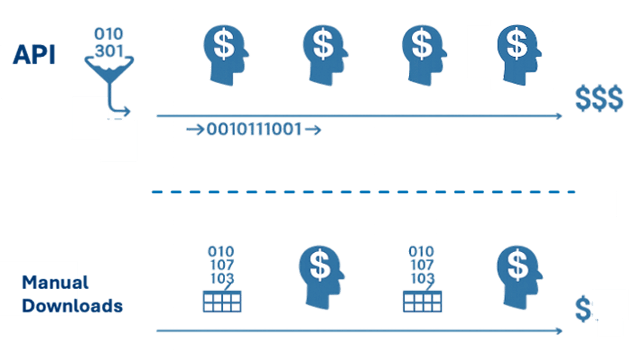
To fully capture these benefits companies would need to invest in scalable infrastructure (including integrated back-office operations) and a centralized data repository that ensures access to near-real-time data. In addition, operating model improvement and change management could allow cross-functional teams to collaborate more effectively and make decisions faster.
McKinsey - Unlocking value with AI in the rack-to-retail fuel market
Call ONEOK we can help.